
 Send Email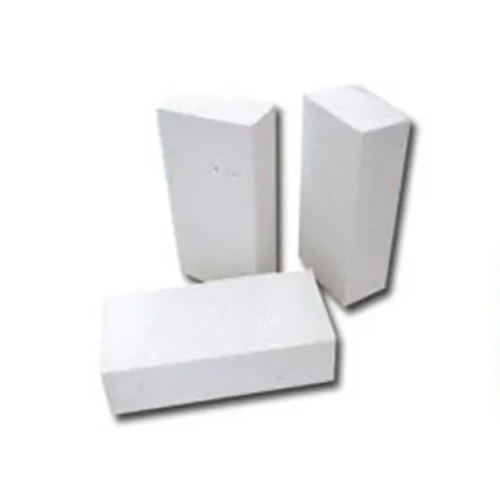


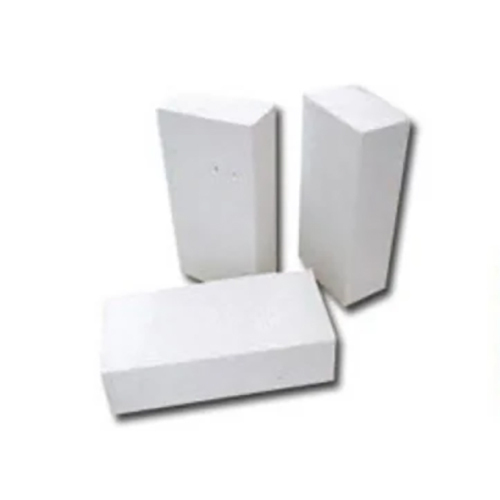

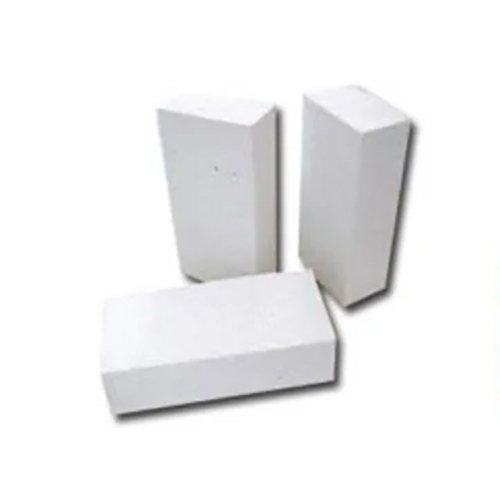

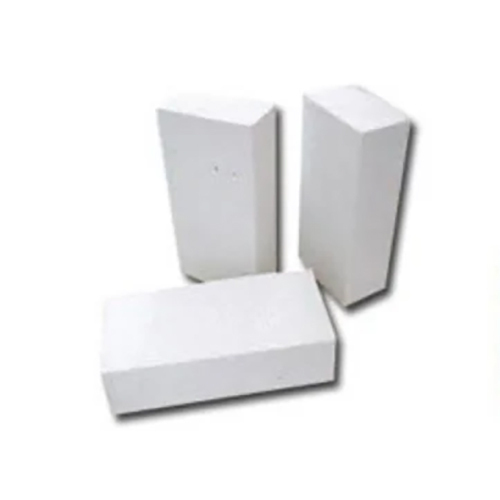
Cold Face Insulation Bricks
27 INR/Piece
Product Details:
- Strength Excellent Dimensional Stability
- Type Cold Face Insulation Brick
- Compressive Strength 25 MPa
- Dry Density Grade Low Density
- Cavity Solid
- Drying Shrinkage 0.3%
- Color Light Yellow
- Click to view more
X
Cold Face Insulation Bricks Price And Quantity
- 27 INR/Piece
- 100 Piece
Cold Face Insulation Bricks Product Specifications
- 115 mm
- Insulation lining for industrial furnaces, kilns, and equipment
- High
- 0.88
- 2%
- 75 mm
- 230 mm
- 230 x 115 x 75 mm
- 1000 Gram per cubic centimeter(g/cm3)
- High
- 18%
- Approx. 2.1 kg
- High Alumina / Fireclay
- Solid
- Low Density
- Cold Face Insulation Brick
- 25 MPa
- Excellent Dimensional Stability
- 0.3%
- Pressed
- 0.82
- Rectangular
- 0.14-0.20 W/mK at 350C
- Light Yellow
- Standard export packaging
- Excellent under cyclic heating
- Textured
- Up to 1000C
- Moderate
- Square cut
- Non-combustible
- 10%
- Dry Pressed
Cold Face Insulation Bricks Trade Information
- Cash Advance (CA), Cash in Advance (CID), Cheque
- All India
Product Description
- Service Temperature :- Service Temperature in oC 1050-1500
- Bulk Density :- in gms/cc (Max) 0.5 -1.2
- Apparent Porosity in % (min) :- 60 %
- Cold Crushing Strength in kg/Cm2/(min) :- 0.15-30
- Thermal Conductivity in Kcal/M/ Hr/oC(max) :- 0.12 - 0.18
- Permanent Linear change after re-heating (at services temp. for 5 hrs :- 0.5 -1.0
| TYPICAL AVERAGE DATA OF COLD FACE INSULATION BRICKS (METRIC UNITS) |
|||||||
| PROPERTIES | C.F. RCI-7 | H.F. RCI-8 | H.F. RCI-9 | LWFB RCI-10 | H.F. RCI-13 | H.F. RCI-14 | H.F. RCI-15 |
| Service Temperature in oC | 1050 | 1200 | 1250 | 1250 | 1300 | 1400 | 1500 |
| Bulk Density in gms/cc (Max) | 0.80 | 0.85 | 0.90 | 1.00 | 1.10 | 1.20 | 1.30 |
| Apparent Porosity in % (min) | 70 | 65 | 60 | 60 | 55 | 50 | 50 |
| Cold Crushing Strength in kg/Cm2/(min) | 12 | 15 | 20 | 25 | 30 | 30 | 40 |
| Thermal Conductivity in Kcal/M/ Hr/oC(max) at Hot face temp. of 600oC(max) | 0.20 | 0.23 | 0.24 | 0.28 | 0.30 | 0.35 | 0.40 |
| Permanent Linear change after re-heating (max) in % for 3 hrs at temperature of | 1.5 (1050) | 1.5 (1200) | 1.5 (1250) | 1.5 (1250) | 1.5 (1300) | 1.5 (1350) | 1.5 |
Advanced Insulation for High-Temperature Environments
Cold Face Insulation Bricks are meticulously formulated for thermal efficiency in demanding industrial settings. Their low density, excellent compressive strength, and high porosity optimize insulation performance, while excellent mechanical and thermal properties ensure durability under repetitive heating cycles. They are well-suited for use in the manufacturing, metallurgy, and ceramics industries throughout India.
Reliable Performance, Easy Installation
With standardized export packaging and a dry pressed manufacturing process, these bricks are convenient to transport and handle. The rectangular, solid structure and square cut edges facilitate systematic layout during installation. The bricks' excellent dimensional stability and low drying shrinkage ensure a long service lifespan, even in environments prone to severe temperature variations.
FAQ's of Cold Face Insulation Bricks:
Q: How are Cold Face Insulation Bricks typically used in industry?
A: These bricks are primarily used for insulation lining in industrial furnaces, kilns, and equipment where superior thermal protection is needed to maintain energy efficiency and process stability.Q: What are the advantages of using high alumina or fireclay in these bricks?
A: High alumina and fireclay provide excellent thermal resistance, mechanical strength, and stability at elevated temperatures, ensuring that the bricks withstand rigorous industrial conditions without degrading.Q: When should Cold Face Insulation Bricks be chosen over other types of insulation materials?
A: They are ideal when you require non-combustible properties, moderate acid resistance, and thermal stability under frequent temperature fluctuations, particularly in industries needing robust insulation at service temperatures up to 1000C.Q: Where can these bricks be effectively applied?
A: They are best suited for use in the lining of furnaces, kilns, rotary equipment, and other industrial structures exposed to high temperatures and variable thermal cycles.Q: What is the manufacturing process of these insulation bricks?
A: Cold Face Insulation Bricks are produced via a dry pressing method, resulting in a solid, dense structure with a textured finish and precise, square-cut edges for easy installation.Q: How does the brick's high porosity benefit its thermal performance?
A: High porosity lowers the thermal conductivity, meaning the bricks can better insulate by reducing heat transfer, which leads to improved energy efficiency in industrial processes.Tell us about your requirement

Price:
Quantity
Select Unit
- 50
- 100
- 200
- 250
- 500
- 1000+
Additional detail
Mobile number
Email

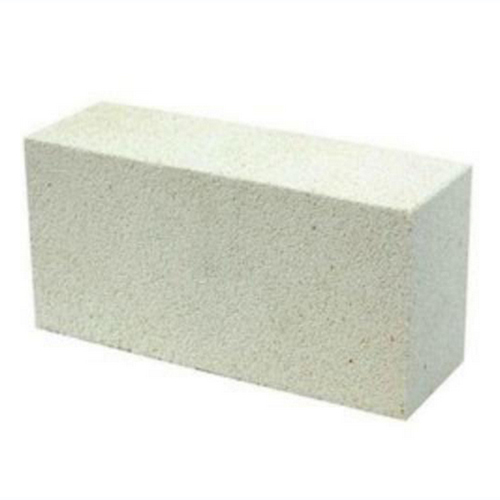
Other Products in 'Insulation Bricks' category

Contact Us
Address
- B No. A-136, Vijay Singh Pathik Nagar,Bhilwara - 311001, Rajasthan, India
- Phone : 08045804337
- Mr. Amit Kumar Agarwal (Director)
- Mobile : 08045804337
- Send Inquiry
SARGAM REFRA PRIVATE LIMITED
GST : 08ABKCS5835M1ZM
 Send Inquiry

SARGAM REFRA PRIVATE LIMITED
All Rights Reserved.(Terms of Use)
Developed and Managed by Infocom Network Private Limited.
Developed and Managed by Infocom Network Private Limited.
