
 Send Email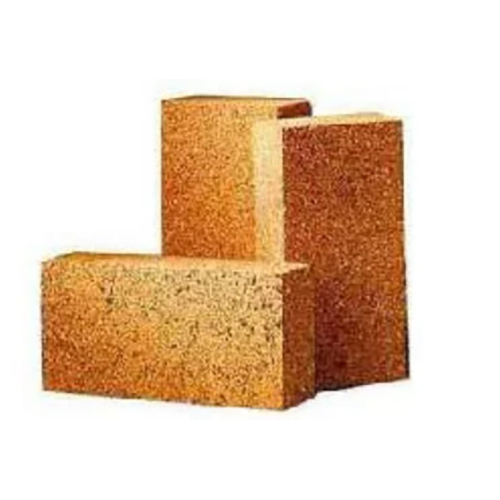
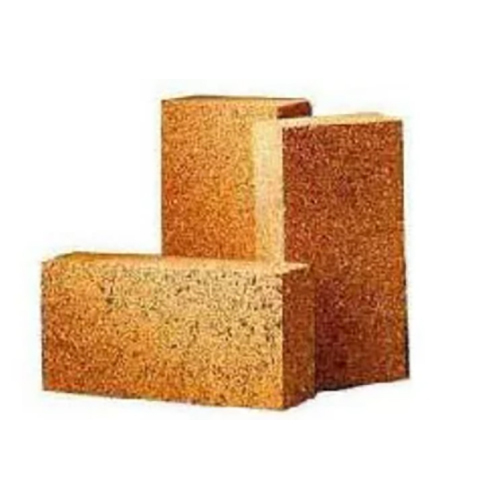
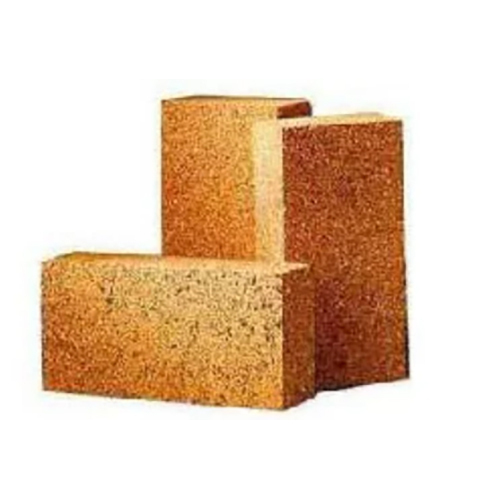
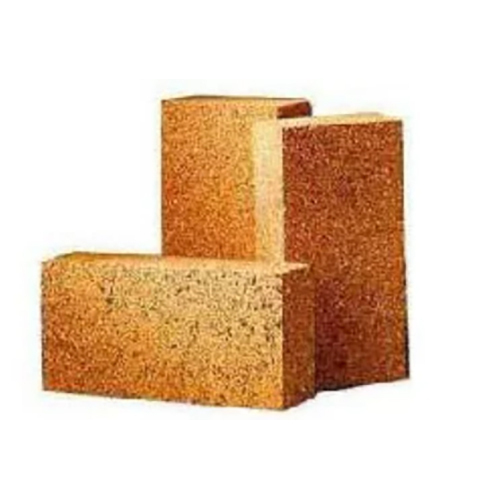
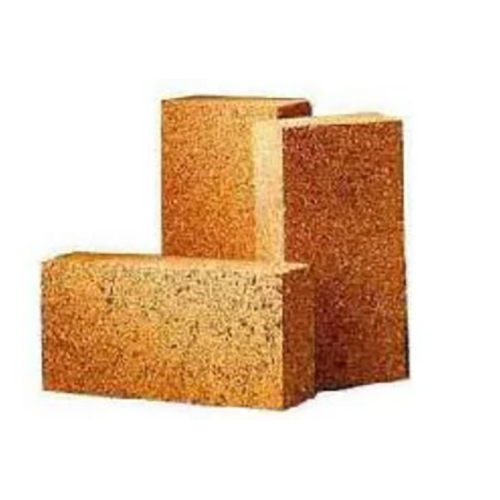
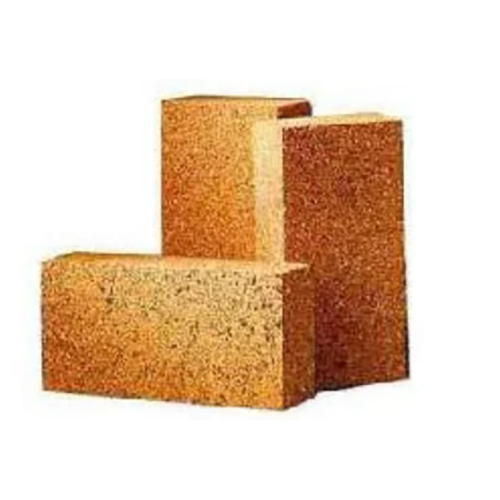
Mica Insulation Bricks
33 INR/Piece
Product Details:
- Color Brown
- Length 230 mm
- Compressive Strength 15-20 MPa
- Frost Resistance Excellent
- Type Insulation Brick
- Dry Density Grade 600-800 kg/m3
- Strength High
- Click to view more
X
Mica Insulation Bricks Price And Quantity
- 33 INR/Piece
- 1000 Piece
Mica Insulation Bricks Product Specifications
- Industrial furnaces, kilns, high-temperature insulation, lining for boilers and reactors
- 10-15%
- Low
- Solid
- 25-75 mm
- High
- 230x115x75 mm
- Other
- <0.2%
- <5%
- 115 mm
- 0.93
- 0.20-0.24 W/mK
- High
- 700 Gram per cubic centimeter(g/cm3)
- Pressed
- Rectangular
- 1.9 - 2.6 kg
- 600-800 kg/m3
- 15-20 MPa
- Insulation Brick
- Excellent
- 230 mm
- Brown
- 600-800 kg/m3
- Up to 1000C
- Non-toxic
- Effective
- Excellent
- Up to 1200C
- Wooden pallet or as requested
- Smooth
Mica Insulation Bricks Trade Information
- Cash Advance (CA), Cash in Advance (CID), Cheque
- Yes
- Free samples available with shipping and taxes paid by the buyer
- All India
Product Description
- Service Temperature :- Service Temperature in oC 1050-1500
- Bulk Density :- in gms/cc (Max) 0.5 -1.2
- Apparent Porosity in % (min) :- 60 %
- Cold Crushing Strength in kg/Cm2/(min) :- 0.15-30
- Thermal Conductivity in Kcal/M/ Hr/oC(max) :- 0.12 - 0.18
- Permanent Linear change after re-heating (at services temp. for 5 hrs :- 0.5 -1.0
| PROPERTIES | MICA BASE | RCI 850 | RCI HIGH CCS | |||
|
|
RCI 500 | RCI 600 | RCI 700 | RCI 800 |
|
|
| Service Temperature in oC (max) | 1050 | 1050 | 1050 | 1100 | 1100 | 1150 |
| Bulk Density in gms/cc(max) | 0.5 | 0.6 | 0.7 | 0.8 | 0.85 | 1.2 |
| Apparent Porosity in %(min) | 78 | 72 | 70 | 68 | 65 | 50 |
| Cold Crushing Strength in kg/Cm2/(min) | 6 | 8 | 10 | 15 | 20 | 100 |
| Thermal Conductivity in Kcal/M/Hr/oC (max) at average temp. of 50oC | 0.10 | 0.12 | 0.14 | 0.15 | 0.18 | 0.20 |
| 350oC | 0.12 | 0.13 | 0.18 | 0.20 | 0.24 | 0.30 |
| 600oC | 0.15 | 0.16 | 0.20 | 0.22 | 0.28 | 0.38 |
| Permanant Linear change after re-heating at service temp. for 5 hrs max(%) | 0.5 | 0.5 | 0.6 | 0.6 | 0.6 | 1.0 |
Superior Thermal Insulation in Demanding Applications
Mica Insulation Bricks are specifically designed for environments requiring reliable heat resistance, such as industrial furnaces and kilns. Their high refractoriness under load and robust material composition enable consistent performance at temperatures reaching 1000C. The bricks also offer effective sound insulation, making them a practical choice for loud industrial settings. Their smooth edges and high compressive strength contribute to easy installation and long-lasting durability.
Robust Physical Properties and Exceptional Safety
With a density of 600-800 kg/m3 and a high porosity profile, mica insulation bricks balance lightweight handling with strong mechanical integrity. They are non-toxic and feature low moisture content (<5%), mitigating risks of off-gassing or structural compromise. The bricks are also highly resistant to fire, alkali attacks, and frost, making them suitable for a variety of harsh operational environments.
FAQs of Mica Insulation Bricks:
Q: How are Mica Insulation Bricks installed in industrial applications?
A: Mica Insulation Bricks are typically installed by stacking or lining the interiors of industrial furnaces, kilns, boilers, and reactors, using conventional refractory techniques. Their smooth edges and standard rectangular shape (230x115x75 mm) allow for precise placement and secure fit during construction or maintenance.Q: What benefits do mica insulation bricks offer over conventional insulation materials?
A: Mica insulation bricks provide superior fire and frost resistance, good alkali resistance, and effective sound insulation. Their low thermal conductivity and high porosity ensure exceptional thermal barrier properties while maintaining high compressive strength and non-toxicity, making them safer and more durable than many alternative materials.Q: Where can mica insulation bricks be used most effectively?
A: These bricks are ideally suited for high-temperature industrial environments such as furnace linings, kiln walls, reactor insulation, and boiler cavities. They perform reliably in locations where insulation, fire resistance, and durability are essential requirements.Q: When should mica insulation bricks be considered for insulation solutions?
A: Consider mica insulation bricks when your application requires service temperatures up to 1000C, high resistance to fire and alkali attack, effective sound insulation, and non-toxic, robust construction. Their use is optimal during new build projects or maintenance upgrades in heavy industrial processes.Q: What is the process of manufacturing mica insulation bricks?
A: The manufacturing process involves pressing natural mica into brick form to achieve the desired thickness between 25-75 mm and dry density grade of 600-800 kg/m3. This pressed method ensures smooth edge detail, solid cavity structure, and consistent compressive strength across batches.Q: How do mica insulation bricks contribute to energy efficiency?
A: Due to their low thermal conductivity (0.20-0.24 W/mK) and high porosity, mica insulation bricks minimize heat loss in industrial enclosures, thereby optimizing energy consumption and reducing operational costs associated with temperature maintenance.Tell us about your requirement

Price:
Quantity
Select Unit
- 50
- 100
- 200
- 250
- 500
- 1000+
Additional detail
Mobile number
Email

Other Products in 'Insulation Bricks' category

Contact Us
Address
- B No. A-136, Vijay Singh Pathik Nagar,Bhilwara - 311001, Rajasthan, India
- Phone : 08045804337
- Mr. Amit Kumar Agarwal (Director)
- Mobile : 08045804337
- Send Inquiry
SARGAM REFRA PRIVATE LIMITED
GST : 08ABKCS5835M1ZM
 Send Inquiry

SARGAM REFRA PRIVATE LIMITED
All Rights Reserved.(Terms of Use)
Developed and Managed by Infocom Network Private Limited.
Developed and Managed by Infocom Network Private Limited.
